





Enlarged Adenoids and Tonsils: Causes, Symptoms, and Care
Enlarged Adenoids & Tonsils: Causes, Symptoms & Care
Tonsils and adenoids help defend the body against germs, especially during childhood. But when they become enlarged or irritated, breathing, swallowing, sleep, and even the ears can start to feel the effects.

If you have ever looked into the back of a sore throat and seen swollen tonsils, you already know where the tonsils are.
Adenoids are a little more mysterious. They sit higher up, behind the nose and above the throat, so you cannot normally see them just by opening your mouth.
Both belong to the body's lymphatic and immune system. They help recognize germs entering through the nose and mouth, which makes them especially active during childhood.
Sometimes that useful immune tissue becomes enlarged, irritated, or infected. When it does, the symptoms can range from a simple sore throat to persistent mouth breathing, snoring, ear pressure, or disrupted sleep.
What Are Tonsils & Adenoids?
Tonsils and adenoids are both collections of lymphatic tissue positioned near the entrance of the respiratory and digestive systems.
Tonsils
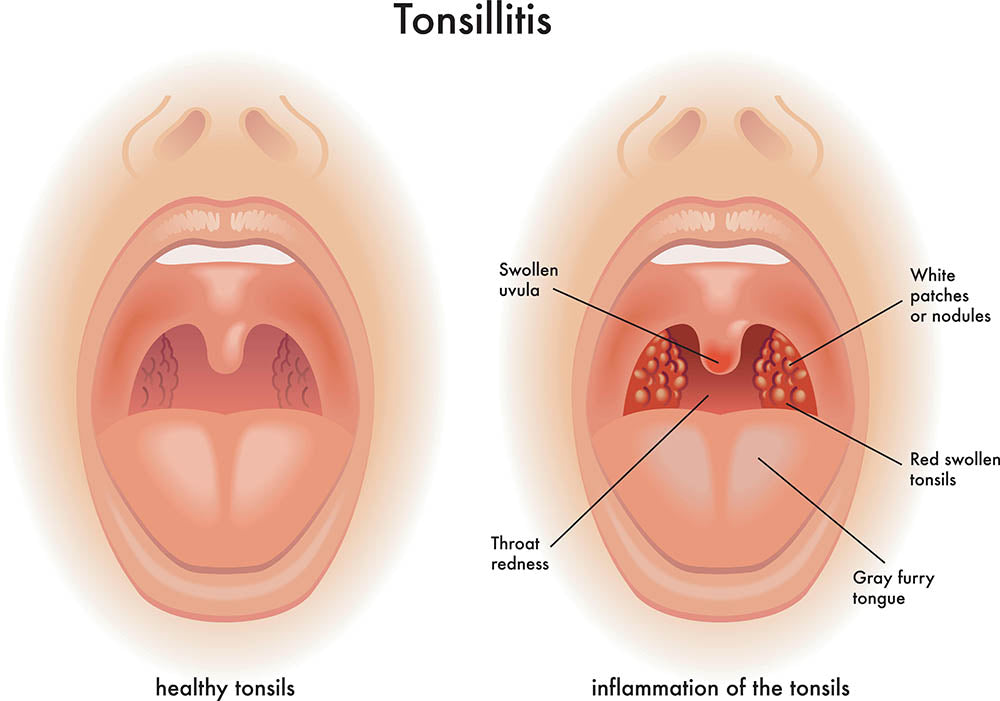
The palatine tonsils are the two rounded pads you can see on either side at the back of the throat. They help sample germs entering through the mouth and participate in the immune response.
Adenoids
Adenoids sit behind the nasal cavity, above the soft palate. They also help trap and respond to germs entering through the nose and are particularly active in young children.
Together, these tissues form part of the body's early immune defense. They contain immune cells that help recognize microorganisms and produce antibodies.
Adenoids are mostly a childhood story. They tend to reach their largest size around ages 3 to 5 and normally begin shrinking as children get older. By adulthood, very little adenoid tissue usually remains. Learn more from Cleveland Clinic.
Enlarged Does Not Always Mean Infected
This distinction is helpful because the words tonsillitis, adenoiditis, and enlarged adenoids are often used as though they mean exactly the same thing.
Enlarged tissue
Tonsils or adenoids can simply be larger than usual. They may stay enlarged after repeated infections or become chronically irritated. The main problem may be physical obstruction rather than an active infection.
Tonsillitis or adenoiditis
When the tissue is actively inflamed or infected, symptoms are more likely to include sore throat, fever, redness, tenderness, mucus, swollen glands, or feeling generally unwell.
This matters because a child can have very large adenoids without having a fever or obvious infection. Their main signs may simply be a blocked-sounding nose, mouth breathing, snoring, or restless sleep.
What Symptoms Can Enlarged Tonsils & Adenoids Cause?
When the tonsils are involved
- Sore or scratchy throat
- Painful or difficult swallowing
- Red, swollen tonsils
- White or yellow patches during some infections
- Bad breath
- Fever
- Reduced appetite
- Swollen glands in the neck
When the adenoids are involved
- Persistent nasal blockage
- Mouth breathing
- A nasal or "blocked" sounding voice
- Chronic runny nose
- Snoring or noisy breathing
- Restless sleep
- Recurring ear pressure or infections
- Dry mouth or throat from mouth breathing
The American Academy of Otolaryngology lists mouth breathing, a blocked-sounding voice, chronic runny nose, recurrent ear infections, snoring, and pauses in breathing among the common clues that enlarged tonsils or adenoids may be interfering with the airway. See the ENT Health guide.
Traditional Homeopathic Support for Enlarged Adenoids
When the main picture is nasal blockage, mouth breathing, throat pressure, swelling, or discomfort associated with enlarged adenoids, homeopathy offers a traditional way to support the whole symptom pattern.
Classical homeopathy may use individual remedies when one remedy picture is especially clear. A combination formula can be more convenient when several of the common adenoid symptoms appear together.
That is exactly where BM96 fits.

BM96 for adenoid swelling, congestion & throat pressure
BM96 Enlarged Adenoids & Lymph Nodes combines seven traditional homeopathic ingredients associated with the discomfort that often accompanies enlarged or irritated adenoid tissue.
It is traditionally used when the picture includes nasal congestion, difficulty breathing comfortably through the nose, frequent mouth breathing, throat pressure or fullness, ear discomfort, snoring, or restless sleep related to obstruction.
Why a combination? Enlarged adenoids rarely create just one sensation. Nasal blockage can lead to mouth breathing, a dry throat, snoring, ear pressure, and poor sleep at the same time. BM96 brings together several traditional remedy indications in one formula rather than asking you to choose multiple single remedies yourself.
Why Do Tonsils & Adenoids Become Enlarged?
There is not always one single cause.
Because these tissues meet germs entering through the nose and mouth, they naturally become active during respiratory infections. They may enlarge temporarily and then settle again.
Common contributors include:
- Viral infections: the most common cause of tonsillitis
- Bacterial infections: including group A Streptococcus, which causes strep throat
- Repeated respiratory infections: especially in school-age children
- Allergies: which can keep the nose and throat chronically irritated
- Smoke and airborne irritants: which may aggravate already-sensitive tissues
Most tonsillitis is caused by common viruses, while bacterial infections such as strep are another important cause.
Why are children affected so often?
Part of it is simple exposure. Children spend a lot of time close to other children, so colds, flu, strep, and other respiratory infections circulate easily.
Their adenoids are also naturally larger and more active during the same years when upper-respiratory infections are especially common.
Why can enlarged adenoids affect the ears?
The adenoids sit close to the openings of the Eustachian tubes, which help ventilate the middle ears. When adenoid tissue is enlarged or inflamed, ear pressure, fluid buildup, or recurrent ear infections may appear alongside nasal symptoms.
That connection surprises many parents: a child who keeps having blocked ears or ear infections may also be mouth breathing, snoring, or dealing with persistent nasal congestion. Sometimes the nose, throat, sleep, and ears are all part of the same upper-airway picture.
Simple Ways to Support Comfort at Home
Home care depends on whether the main problem is throat irritation, nasal congestion, or an active infection, but a few gentle habits can make the whole upper airway more comfortable.
Keep fluids coming
Water, broth, and warm drinks help keep the throat moist and make thick mucus easier to manage. Hydration is especially important with fever or reduced appetite.
Use saline for a blocked nose
Saline nasal spray can gently moisturize the nasal passages and loosen mucus without adding medication. Use age-appropriate products and instructions.
Add moisture to dry air
A clean cool-mist humidifier can make nighttime breathing and a dry, irritated throat more comfortable, especially during winter or heated indoor conditions.
Reduce irritants
Keep cigarette smoke, vaping aerosols, heavy fragrance, and other irritating fumes away from a child or adult whose throat and nasal tissues are already sensitive.
Give the body time to recover
Rest matters during an active infection. A few quieter days can be more useful than trying to push through fever, throat pain, or poor sleep.
Follow the symptom pattern
If you use homeopathy, choose according to the overall pattern rather than treating every swollen throat the same way. BM96 is specifically designed around the enlarged-adenoid picture of congestion, mouth breathing, throat pressure, and upper-airway discomfort.
Snoring Is Not Always Just a Cute Childhood Habit
Occasional snoring during a cold is common. Frequent loud snoring, restless sleep, gasping, or pauses in breathing deserve more attention.
Large tonsils and adenoids can narrow the upper airway during sleep. In some children, that contributes to sleep-disordered breathing or obstructive sleep apnea.
An ENT specialist can assess whether enlarged tonsils or adenoids are affecting breathing during sleep and whether further evaluation, including a sleep study in some cases, is appropriate. Learn more from ENT Health.
When Should You See a Doctor or ENT?
Natural support can be useful for comfort, but persistent airway obstruction or infection needs proper evaluation.
Arrange a medical evaluation if you notice:
- Regular loud snoring or pauses in breathing during sleep
- Persistent mouth breathing even when there is no cold
- Repeated ear infections or ongoing ear pressure
- Difficulty swallowing or frequent throat infections
- A sore throat with fever that is not improving
- Very enlarged tonsils that appear to interfere with eating or breathing
- Persistent nasal blockage or a blocked-sounding voice
- Sleep that remains restless or unrefreshing
Get urgent medical care for significant difficulty breathing, extreme difficulty swallowing, or heavy drooling because swallowing has become too difficult. These are among the symptoms Mayo Clinic recommends treating promptly.
A clinician may examine the throat, assess the nose and ears, test for strep when appropriate, consider allergies, or refer to an ear, nose, and throat specialist.
When enlarged tonsils or adenoids repeatedly cause significant airway obstruction, sleep apnea, or serious recurrent infections, surgery may be discussed. That decision depends on the person's age, symptoms, frequency of infections, breathing, sleep, and overall health.
Traditional-use note: BM96 descriptions in this article reflect traditional homeopathic practice. Homeopathic claims are not accepted medical evidence and have not been evaluated by the FDA. Homeopathy can be part of a broader wellness approach, but breathing difficulty, sleep apnea, persistent infections, or significant swallowing problems should be medically evaluated.
The Bottom Line
Tonsils and adenoids are not useless bits of tissue. They are part of the immune system and are particularly active during childhood.
Trouble starts when they become too enlarged, repeatedly irritated, infected, or large enough to interfere with comfortable breathing and sleep.
Hydration, saline, clean humidified air, rest, and reducing airway irritants can all support everyday comfort.
For a more targeted traditional approach, BM96 Enlarged Adenoids & Lymph Nodes combines seven homeopathic ingredients selected specifically around adenoid irritation, nasal discomfort, mouth breathing, and throat discomfort.
Explore BM96 Adenoid Support
I have two questions. What remedy do you suggest for swollen parotid glands, and is it ok to take remedies together if you are using more than one?
Thank you
Leave a comment