





How to Reduce a Neck Hump Naturally: Exercises, Remedies, Tips
How to Reduce a Neck Hump Naturally
A rounded area at the base of your neck can be related to posture, muscle imbalance, or changes in the spine. Here is how to tell what may be going on and the simple habits that can help you stand taller and move more comfortably.

Maybe you noticed it in a photo. Maybe your neck and shoulders have been feeling tighter lately. Or perhaps you spend most of the day leaning toward a laptop and have started wondering whether your posture is changing.
A rounded area where the neck meets the upper back is often called a neck hump or Dowager's hump. When posture is part of the problem, strengthening, stretching, better desk habits, and more movement can make a meaningful difference.
But there is one important thing to know before you start trying to “fix” it: not every bump at the base of the neck has the same cause.
Some are mainly postural and flexible. Others reflect structural changes in the spine, including osteoporosis-related compression fractures. And sometimes what looks like a neck hump is actually a pad of fatty tissue rather than a spinal curve.
So the goal is not to force your body into perfect posture. It is to understand what may be contributing, build stronger movement habits, and know when getting a professional opinion makes sense.
- What Is a Neck Hump?
- Not Every Neck Hump Is the Same
- Why Posture Changes Over Time
- Common Signs & Symptoms
- Can You Actually Reduce It?
- Exercises for Posture & Mobility
- Fix the Habits Behind It
- Supporting Neck & Muscle Comfort
- A Simple 10-Minute Routine
- When Bone Health Matters
- When to See a Healthcare Professional
- The Bottom Line
What Is a Neck Hump?
The upper part of your spine naturally curves slightly forward. Problems arise when that curve becomes more pronounced than it should be.
An excessive forward rounding of the upper back is called kyphosis. From the side, it can make the shoulders look rounded and the head appear to sit farther forward than the rest of the body.
When posture contributes, the muscles around the chest, shoulders, neck, and upper back can gradually adapt to the positions you spend the most time in. Hours spent looking down at phones or leaning toward a screen can make that forward position feel increasingly “normal.”
You can read more about posture-related neck humps in this overview from Cleveland Clinic.
Not Every Neck Hump Is the Same
Before deciding you simply need to sit straighter, it helps to understand the main possibilities.
Posture-related rounding
The upper back rounds and the head moves forward, often after long periods of sitting, screen use, weak upper-back muscles, and tight chest muscles. The posture may change noticeably when you intentionally stand taller.
Spinal kyphosis
Changes in the vertebrae themselves can increase the curve. Osteoporosis, compression fractures, age-related degeneration, and some spinal conditions can contribute. Exercise may help comfort and mobility but cannot simply reshape damaged vertebrae.
Fat pad at the neck
Sometimes the visible bump is fatty tissue rather than the spine. This is sometimes called a dorsocervical fat pad or “buffalo hump” and can have different causes that posture exercises will not correct.
A simple clue: if the rounded appearance changes quite a bit when you stand tall, gently bring your head back, and open your chest, posture may be playing a larger role. If it feels fixed, appeared unexpectedly, or comes with other symptoms, getting it evaluated is a better first step.
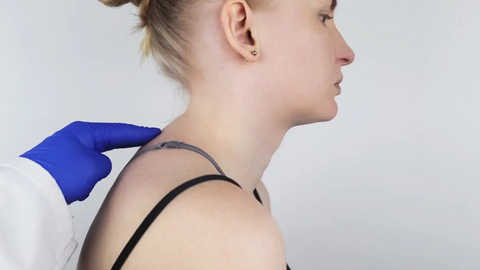
Why Does a Posture-Related Neck Hump Develop?
Your body gets very good at the positions you practice most.
If you spend hours with your head reaching toward a laptop, looking down at a phone, driving, reading, or sitting without much movement, some muscles end up working harder while others do less.
Over time, you may notice a combination of:
- A forward head position, where the ears sit in front of the shoulders.
- Rounded shoulders and tightness across the chest.
- Weaker upper-back muscles that make it harder to maintain an upright position comfortably.
- Reduced upper-back mobility, especially after spending long periods sitting.
- Neck and shoulder fatigue from supporting the head in a forward position.
The answer is not to hold yourself rigidly upright all day. In fact, there is no single posture you need to maintain every minute.
Common Signs & Symptoms
A visible rounded area may be the first thing you notice, but posture changes can also affect how your neck and upper back feel throughout the day.
Common signs can include:
- A rounded upper back or bump near the base of the neck
- Head sitting noticeably forward of the shoulders
- Rounded shoulders
- Neck or upper-back stiffness
- Tightness across the chest and shoulders
- Muscle fatigue after sitting or working at a computer
- Reduced comfort when turning or extending the neck
- Headaches that seem to appear alongside neck tension
These symptoms can have many causes, so recurring or worsening discomfort deserves more than a posture diagnosis from the mirror.
Can You Actually Reduce a Neck Hump?
If posture is a major contributor, you may be able to improve the appearance and feel of the area. The key is consistency rather than aggressive stretching or forcing your spine into position.
Stretching can help loosen areas that have become tight, while strengthening helps your body support a more upright position with less effort. Improving your workstation and moving more frequently prevents you from spending the rest of the day undoing your exercise routine.
Structural kyphosis is different. If vertebrae have changed shape because of osteoporosis, compression fractures, or another spinal condition, posture exercises cannot simply reverse those changes. They may still help with mobility, strength, and comfort when appropriate, but treatment should be guided by the underlying cause.
Think progress, not perfect posture. Less stiffness, easier movement, better awareness, stronger upper-back muscles, and a more comfortable upright position are all meaningful improvements.
Simple Exercises for Better Posture & Upper-Back Mobility
If your neck hump appears to be mainly posture-related and you do not have an injury or medical reason to avoid exercise, these gentle movements are a simple place to start.
Strengthen what helps hold you upright
Chin Tucks
Sit or stand tall. Keeping your eyes level, gently slide your chin straight backward as though you are making a small double chin. Do not tip your head down. Hold for about 3 to 5 seconds, then relax.
Shoulder Blade Squeezes
Relax your shoulders, then gently draw your shoulder blades back and slightly down. Avoid shrugging. Hold for about 5 seconds and release.
Y & T Raises
Lying face down or using a supported position, raise your arms into a Y or T shape while gently engaging your upper back. Keep the movement controlled rather than lifting as high as possible.
Start with a comfortable number of repetitions, such as 8 to 12. Quality matters more than doing a large number.
Open up tight areas
Place your forearm against a doorframe and gently turn away until you feel a comfortable stretch across the front of your chest. Hold for 20 to 30 seconds.
Sit against the back of a chair and gently extend your upper back over the chair while keeping the movement comfortable and controlled.
Tilt one ear toward the same-side shoulder until you feel a mild stretch along the opposite side of your neck. Never force the range.
Stand with your back comfortably near a wall and gently lengthen through the top of your head. Notice what a more centered head position feels like without forcing it.

Exercises should feel like movement, not punishment. Stop if you develop sharp pain, dizziness, numbness, tingling, weakness, or symptoms that travel into an arm.
Your Exercises Matter, but So Does the Other 8 Hours
Doing ten minutes of posture work is useful. Spending the next eight hours leaning toward your screen can quickly cancel out the benefit.
Instead of trying to sit perfectly, set up your environment so better posture requires less effort.
At your desk
- Bring the monitor closer so you do not lean forward to read it.
- Position the screen around eye level.
- Keep the keyboard and mouse close enough that you are not reaching.
- Use a chair that supports your back comfortably.
- Keep your feet supported rather than dangling.
With your phone
- Bring the phone higher instead of dropping your head toward it.
- Support your elbows when reading for longer periods.
- Avoid staying in the same position for long stretches.
- Use voice features when practical to give your neck a break.
- Put the phone down occasionally. Your neck will probably appreciate it.
Break up sitting time
You do not need a full workout every hour. Stand up. Walk to get water. Roll your shoulders. Do a few chin tucks. Stretch your chest. Then get back to what you were doing.
A short movement break every 30 to 60 minutes is much easier to maintain than waiting until the end of the day when your neck already feels stiff.
When Better Posture Comes With Sore Muscles
Changing long-standing movement habits can make muscles around your neck, shoulders, and upper back work differently than they are used to.
That is why it helps to build gradually. You do not need to spend the whole day squeezing your shoulder blades together or aggressively pulling your chin backward.
If a workout, long day, or new strengthening routine leaves your muscles feeling especially sore or overworked, Arnica is one traditional homeopathic option you may already know.

For sore, overworked muscles
Arnica Montana 200C is traditionally used for muscle soreness, tenderness, overexertion, and recovery after physical activity.
It will not correct the spinal curve itself, but if posture exercises or an active day leave your neck, shoulders, or back feeling worked over, Arnica can be a simple addition to your recovery routine.
Shop Arnica MontanaA Simple 10-Minute Daily Posture Routine
You do not need an hour-long routine. A short sequence you actually repeat is much more useful.
Warm up: gently move your shoulders forward and backward and slowly turn your head from side to side within a comfortable range.
Chin tucks: perform a slow set with short holds, focusing on control rather than force.
Upper-back strength: alternate shoulder blade squeezes with Y or T raises.
Chest mobility: use a doorway stretch to gently open the front of your shoulders and chest.
Upper-back mobility: practice gentle thoracic extension over a chair or foam roller if that feels comfortable for you.
Reset your setup: check your screen height, bring your mouse and keyboard closer, and decide when you will take your next movement break.
If ten minutes feels like too much at first, start with three. Consistency beats intensity here.
Do Not Forget About Bone Health
A rounded upper back is not always about slouching. In older adults, especially those at risk of osteoporosis, weakened vertebrae can develop compression fractures that increase the curve of the spine.
This is particularly worth discussing with a healthcare professional if you notice a more pronounced curve alongside:
- Loss of height over time
- New or unexplained back pain
- A history of osteoporosis or low bone density
- A fracture from a relatively minor fall or impact
- Long-term corticosteroid use
- A noticeable posture change that seems to have appeared without an obvious change in your habits
A healthcare professional may recommend imaging or a bone-density test if there is concern about structural changes or osteoporosis.
Posture work and bone health are two different pieces of the puzzle. Exercises can strengthen muscles and support mobility, but they cannot replace evaluation and treatment when weakened bones or fractures are involved.
When Should You See a Healthcare Professional?
If the change seems gradual, flexible, and clearly connected with long periods of sitting, gentle posture work is a reasonable place to begin.
It is better to get evaluated if:
- The hump appeared suddenly or after a fall or injury.
- Pain is significant, persistent, or getting worse.
- You experience numbness, tingling, or weakness.
- Pain shoots into an arm or leg.
- You have known osteoporosis or significant risk factors for weak bones.
- You have lost noticeable height.
- The curve seems fixed or continues becoming more pronounced.
- You are not sure whether the bump is coming from the spine or soft tissue.
Seek prompt medical attention for new severe weakness, major balance problems, loss of bladder or bowel control, or difficulty breathing.
A physical therapist can also be particularly helpful when posture and movement are the main concerns. They can assess what is actually tight or weak and adapt exercises to your body instead of relying on a one-size-fits-all routine.
The Bottom Line
If the rounded area at the base of your neck is mainly related to posture, small daily changes can add up.
Strengthen your upper back, gently improve mobility, bring screens closer to eye level, stop spending hours in one position, and give your body regular opportunities to move.
Just remember that not every neck hump is a posture problem. Structural changes, osteoporosis, compression fractures, and fatty tissue can create a similar appearance and may need a different approach.
The goal is not perfect posture. It is a stronger, more comfortable body that can move through different positions with ease.
Leave a comment