





Blood Donation: What You Need to Know
Considering donating blood? Every donor should know what the act means, the risks, and the benefits.
First, blood donation is a solidarity gesture where you give a small amount of blood to help people who need transfusions during surgery, transplants, cancer treatment, and other complex interventions.
Your blood comprises cells that carry oxygen and nutrients, fight infection, and help clot blood.
An adult has about five liters of blood, and a single donation takes up to 450 ml. That volume can help as many as four people. Your body replaces the donated volume within about 72 hours.
The different blood types
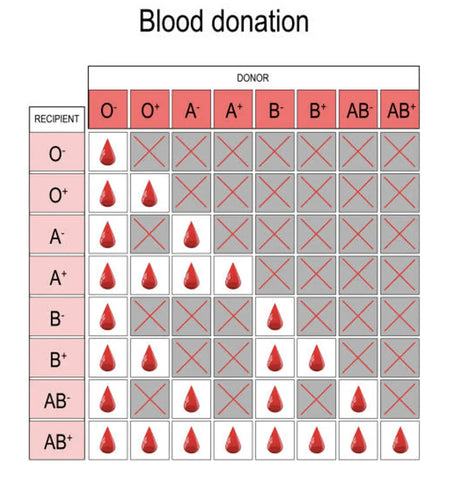
Blood types are set by antigens on red blood cells and antibodies in plasma. The ABO system divides blood into four main groups:
Blood A. Contains anti-B antibodies. People with type A can receive A or O blood.
Blood B. Contains anti-A antibodies. People with type B can receive B or O blood.
AB blood. Has no anti-A or anti-B antibodies, so AB people can receive blood from any ABO type.
Blood O. Has anti-A and anti-B antibodies and is often called a universal donor; O can give to all ABO types but can receive only from O.
Transfusions must match compatible types to avoid dangerous reactions.
What is the Rh factor?
Blood is also classified by the Rh factor, labeled + or -.
Rh+ people have the Rh antigen and can receive Rh+ or Rh- blood, but they can donate only to Rh+ recipients. Rh- people lack the antigen, can donate to both Rh- and Rh+, but can receive only Rh- blood.
Who can donate blood?
Here are common eligibility rules used by many centers.
Donors are usually between 16 and 69 years old and weigh more than 50 kg. You must bring an official photo ID. Minors under 18 need formal parental or guardian consent.

Autologous blood donation
Autologous donation is when a patient donates blood for their own future use, commonly before a scheduled surgery.
You need a written request from your surgeon specifying the amount and timing. Since you receive your own blood, the risk of transfusion-transmitted infection is avoided.

Apheresis blood donation
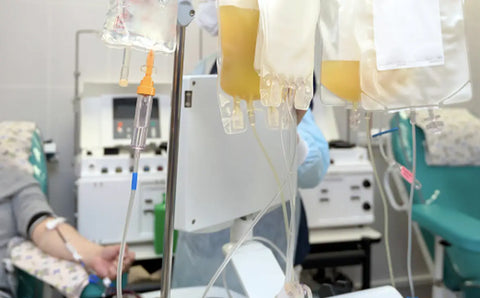
Apheresis uses a machine to collect specific blood components, like plasma, platelets, or red cells, while returning the rest to the donor.
The machine separates blood by centrifugation into plasma, platelet-rich plasma, white blood cells, and red blood cells, so staff can collect only the needed component.
Plasma
Plasma is yellowish and mostly water, salts, and proteins. Plasma mainly consists of water, salts, and proteins. It helps patients who need clotting proteins and supplies raw material for medicines like albumin and immunoglobulins.
Blood cells
Red cells, white cells, and platelets each have a role. Red blood cells carry oxygen from the lungs to tissues. White blood cells fight infections. Platelets stop bleeding and help clot wounds.
Who can be an apheresis donor?
To donate by apheresis, you must meet the usual criteria for conventional donation. The apheresis team also checks vein condition and blood counts to confirm it's safe to collect the targeted component.
In exceptional cases, donors who do not qualify for whole-blood donation may be accepted for apheresis if they provide a rare component or stem cells for transplant.
How does apheresis work?
The process uses a sterile disposable kit inside a collection machine. Blood is drawn, mixed with anticoagulant, and centrifuged to separate components into layers. Staff collects the needed part into a small bag and returns the remaining components to your circulation.
Deixe um comentário