





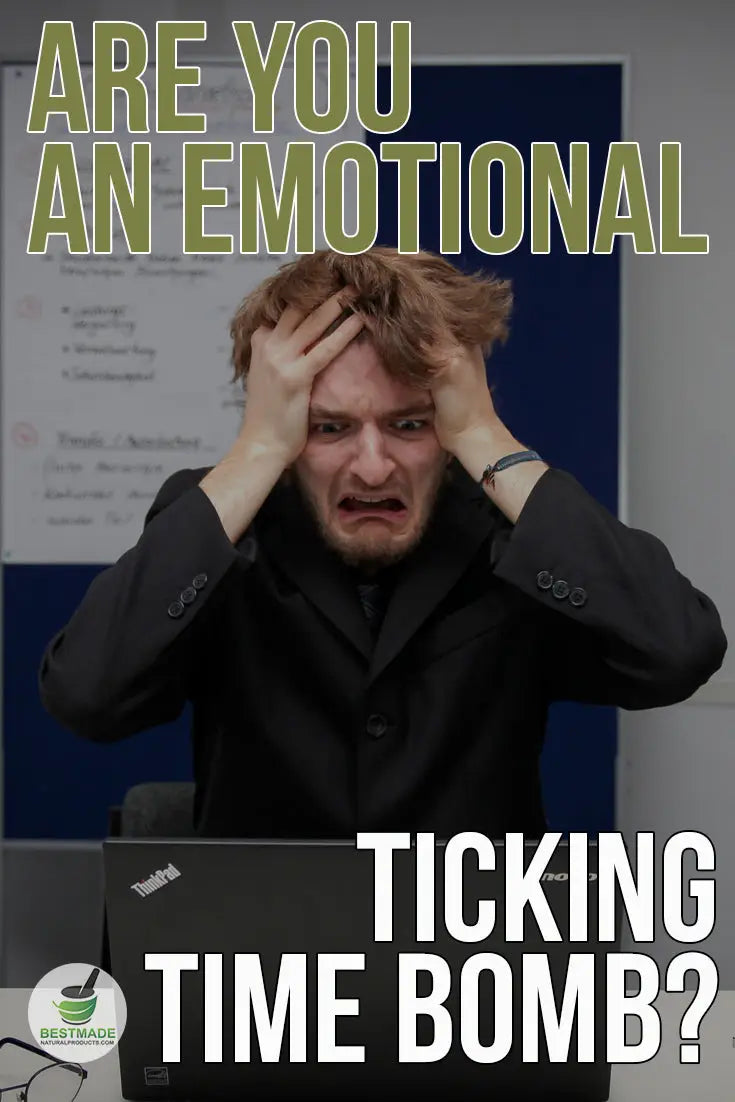
Are You an Emotional Ticking Time Bomb?
Are You an Emotional Ticking Time Bomb?
When frustration keeps building, even a small comment can become the final straw. Learn how to spot the warning signs, calm the pressure before it spills over, and respond in a way you won’t regret later.

“Those kids are on my last nerve.”
“If he says that one more time, I’m going to lose it.”
“I just need everyone to leave me alone before I explode.”
Most of us have had a moment like this.
The problem is not that you feel angry, frustrated, disappointed, or overwhelmed. Those are normal emotions. The real problem begins when the pressure builds so quickly that your reaction gets ahead of your judgment.
When a Small Moment Becomes a Big Reaction
Imagine Becky, an experienced customer-service employee having an already difficult day.
She needs help, calls a new supervisor, and gets a rushed, irritated response. The supervisor walks away. Becky immediately shouts back that she knows how to do her job.
Her frustration may be completely understandable. But the reaction creates a second problem.
Now the conversation is no longer only about an unhelpful supervisor. It is also about Becky shouting at work.
That is the danger of the “ticking time bomb” pattern: the trigger may last 30 seconds, but the consequences of the reaction can last much longer.
The same thing can happen at home. A child leaves another mess. Your partner makes one more comment. Someone cuts you off in traffic. On a calm day, you might shrug it off. On an overloaded day, it feels enormous.
Your Body Usually Warns You First
Anger and emotional stress do not live only in your thoughts. Your nervous system reacts too.
As the body's fight-or-flight response becomes more active, you may notice your heart beating faster, your breathing changing, your muscles tightening, and your attention narrowing toward whatever feels threatening or unfair.
Hot face, clenched jaw, tight chest, tense shoulders, racing heart, shaky hands.
“Always,” “never,” “I can’t take this,” “How dare they,” or replaying the same grievance.
Talking louder, interrupting, pacing, slamming things, sending angry messages, or becoming sarcastic.
Learning your own early signs matters because it is much easier to change direction at a 4 out of 10 than at a 10 out of 10.
Catch the first signal. If your jaw always tightens before you snap, that tight jaw becomes useful information. It is your cue to pause.
Five Common Emotional Pressure Points
The same situation can make one person furious and barely bother another. Our reactions are shaped by expectations, past experiences, stress levels, values, health, sleep, and what else is happening that day.
These five emotions commonly sit underneath an explosive reaction:
- Frustration: something is blocking what you are trying to do.
- Fear: you feel threatened, uncertain, exposed, or out of control.
- Disappointment: reality did not match what you expected or hoped for.
- Self-doubt: criticism or conflict touches an insecurity you already carry.
- Anger: a boundary, value, need, or sense of fairness feels violated.
Sometimes the trigger is not really the trigger
If you have slept four hours, skipped lunch, had too much caffeine, dealt with problems all day, and then someone asks one annoying question, the question may only be the final piece.
Before deciding that another person is entirely responsible for how intense you feel, check your baseline.
- Am I exhausted?
- Have I eaten?
- Am I already worried about something else?
- Have I had any quiet time today?
- Am I overstimulated by noise, screens, people, or work?
- Have I been holding in resentment instead of addressing it?
The 5-Step Pause Before You React
You do not need an hour-long meditation session in the middle of an argument. You need enough space to stop an automatic reaction and give your thinking brain a chance to catch up.
Your voice is getting louder. Your chest is tight. You want to fire off the perfect angry reply. Treat that as your cue.
Take a few steady breaths and make the exhale slow and unhurried. The purpose is not to erase the emotion; it is to settle enough to choose what happens next.
Try: “I’m frustrated,” “I feel dismissed,” “I’m embarrassed,” or “I’m scared this won’t work out.” Naming the emotion can make the situation clearer.
Get water, walk outside, use the bathroom, or simply say, “I need a few minutes before we continue this.” A short timeout can prevent a long regret.
Once you are calmer, ask what you really need: an apology, clearer communication, a boundary, practical help, or simply to be heard.
A useful sentence: “I’m too worked up to talk about this well right now. Give me a few minutes and I’ll come back.” Walking away to regulate yourself is very different from abandoning the conversation.
Say What You Need Without Starting Another Fight
Once the emotional surge has passed, be direct without turning the conversation into an attack.
Instead of:
“You never listen to me and you clearly don’t care.”
Try:
“I felt dismissed when I was interrupted. I want to finish what I’m saying before we decide what to do.”
The second version still protects your boundary. And it gives the other person something they can respond to without immediately needing to defend themselves.
Lower the Pressure Before Something Sets You Off
Emotional regulation is much harder when your nervous system is already running on empty.
A few ordinary habits can make you less reactive:
- Protect your sleep: exhaustion reduces patience and makes small problems feel bigger.
- Eat regularly: do not expect your best emotional decisions when you are hungry and depleted.
- Move your body: walking, exercise, stretching, or yoga can help release built-up physical tension.
- Watch your caffeine: too much can add jitteriness and physical tension when you are already stressed.
- Give yourself quiet time: constant noise, notifications, and demands can leave very little emotional room.
- Address problems earlier: resentment grows when you repeatedly say “it’s fine” when it really is not.
Traditional Homeopathic Support When Emotions Feel Heavy
Sometimes the issue is bigger than one irritating conversation.
Grief, disappointment, conflict, prolonged stress, frightening experiences, guilt, or major life changes can leave the nervous system feeling emotionally raw.
Traditional homeopathy pays attention to that wider emotional picture. Remedies are selected according to the type of emotional strain, what triggered it, and how the mind and body respond.
For example, Ignatia has a longstanding traditional association with grief, disappointment, emotional shock, and rapidly changing feelings, while Arnica is traditionally associated with the effects of shock and upsetting experiences. Hypericum, Ferr Phos, and Silica bring additional traditional nervous-system and constitutional patterns into the formula.

Support for the emotional pressure behind the reaction
BM186 Emotional Distress & Trauma Support is a homeopathic combination traditionally used during periods of anger, frustration, grief, disappointment, nervous tension, and emotional strain.
It is especially relevant when difficult emotions come with restlessness, poor concentration, mental or physical fatigue, or the feeling that everyday stress has become harder to handle.
The formula combines Arnica, Ferr Phos, Hypericum, Ignatia, and Silica in one simple liquid remedy for broader emotional and nervous-system support.
Shop BM186What If You Already Lost Your Temper?
You cannot rewind the conversation, but you can repair it.
A useful apology does not sound like:
“I’m sorry, but you made me angry.”
That shifts responsibility back to the other person.
Try something more direct:
“I was angry, but shouting at you was not the way I wanted to handle it. I’m sorry. I want to talk about what bothered me without doing that again.”
Repair does two things: it takes responsibility for your behavior while still leaving room to discuss the real issue that made you upset.
When Anger Needs More Than a Few Deep Breaths
Everyone loses patience sometimes. But frequent or intense outbursts deserve more attention when they begin hurting you or the people around you.
Consider talking with a counselor, therapist, or other qualified professional if:
- You regularly say or do things you regret when angry.
- Your relationships or work are suffering.
- You have trouble calming down once you become upset.
- Anger feels present most of the time rather than occasionally.
- You break things, threaten people, or become physically aggressive.
- Your emotional reactions seem connected with trauma, anxiety, depression, or another ongoing struggle.
If you feel that you may hurt yourself or someone else, create distance from the situation and seek immediate professional or emergency help.
FAQs
Is anger always unhealthy?
No. Anger is a normal emotion and can alert you to unfairness, crossed boundaries, frustration, or unmet needs. The important part is how you respond to it.
How can I calm down quickly when I feel myself getting angry?
Stop speaking for a moment, slow your breathing, name the emotion, and create a little physical or conversational distance if you can. Even a short pause can interrupt an impulsive reaction.
Why do I get angry over small things?
The small event may be landing on top of accumulated stress, poor sleep, hunger, worry, overstimulation, resentment, or emotional exhaustion. Looking at what was happening before the trigger can reveal the bigger pattern.
Does walking away from an argument help?
It can, especially when you clearly say that you need time to calm down and intend to return to the conversation. A short timeout can prevent escalation and make a productive discussion more likely.
What is BM186 traditionally used for?
BM186 is a homeopathic combination traditionally used during periods of anger, frustration, grief, disappointment, emotional strain, nervous tension, difficulty concentrating, and mental or physical fatigue.
Can natural support replace emotional coping skills?
They work best together. Traditional homeopathic support can be part of your wellness routine, while breathing, timeouts, sleep, communication, movement, and professional support when needed help address the wider pattern.
The Bottom Line
Being an “emotional ticking time bomb” usually simply means that pressure is building faster than you are releasing or addressing it.
Learn your warning signs, pause before speaking, move away briefly when you need to, and return to the actual problem once you can think more clearly.
And pay attention to the larger emotional picture. If grief, disappointment, frustration, stress, or nervous exhaustion have been building for a while, traditional support such as BM186 Emotional Distress & Trauma Support can fit naturally alongside the habits and conversations that help you feel steadier again.
Homeopathic uses described above are based on traditional homeopathic practice and are not accepted medical evidence. These statements have not been evaluated by the FDA. BM186 is not a substitute for counseling, mental health treatment, or emergency care when needed. This information is for general wellness education and is not a substitute for professional medical or mental health advice.
Leave a comment